
NBA London Game 2026 Betting Preview: O2 Arena, 18,000 Seats and the Markets That Matter
 Available in US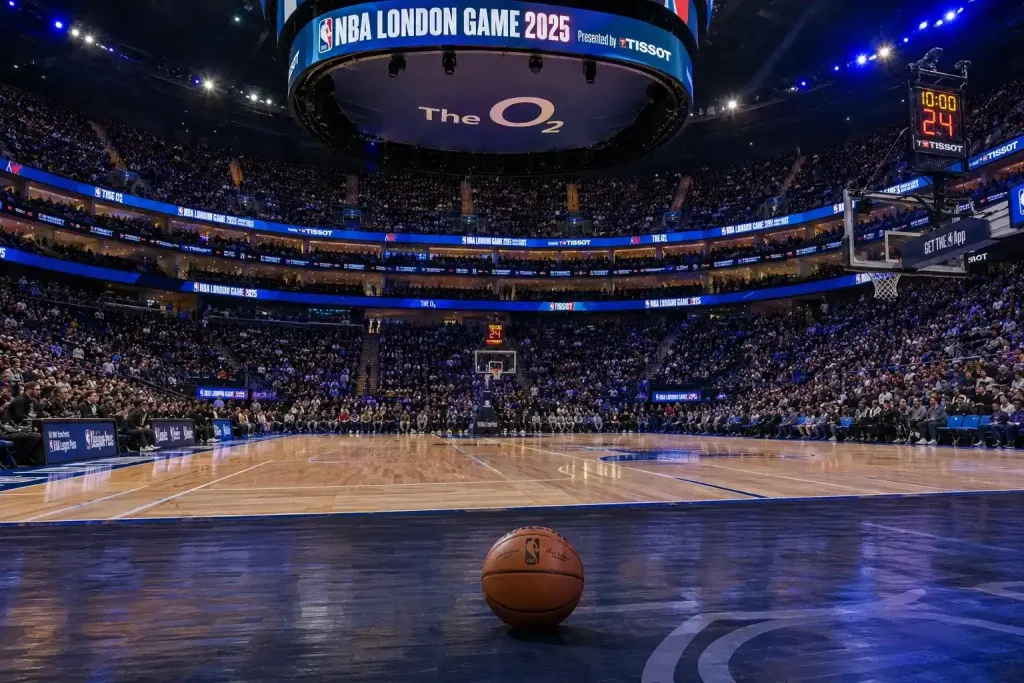
The Friday Night the Tube Smelled Like a Different Sport
The walk from North Greenwich tube to the O2 in January 2026 was unlike anything I had experienced on a basketball night in this country. Jerseys from every Eastern Conference team, accents from every English-speaking region, and the kind of energy that British football fans usually reserve for European nights. Magic versus Grizzlies. 18,000-plus inside the arena. The Prime Video UK feed was on every pub television within a mile.
That London Game was the most-watched NBA broadcast in UK history, with viewership up 90 percent versus the 2019 London Game. The cultural footprint shifted that night in ways the 2019 edition did not. For the 2026-27 London Game, scheduled to follow the same January window, the betting market is already different from what it was even two years ago – and the punter who understands the unique characteristics of London Game betting has edges the standard regular-season approach misses.
See also NBA Europe and London Game betting for the full picture.
The Event Context That Makes This Game Different
The NBA London Game has been a recurring fixture since 2011 with a few gaps. The 2026 edition between Orlando and Memphis was the largest London Game broadcast to date for UK viewers. The 2026-27 edition is expected to maintain the format – single regular-season game, mid-January window, O2 Arena venue, sold-out crowd of 18,000-plus.
What makes the London Game distinct from any other regular-season fixture is the neutral-but-charged venue. Neither team is at home, but the crowd is heavily mixed – supporters of both teams, plus a large contingent of UK fans following star players, plus first-time NBA viewers attending as a curiosity event. The atmosphere differs from a US regular-season game in ways that affect player performance and game flow.
The teams treat the London Game as a profile-raising opportunity. Stars are expected to play. Coaches publicly commit to standard rotations. The reputational risk of poor performance in the showcase international market is high enough that even teams in tank trajectories play their best lineups. The motivational asymmetry that affects other regular-season games is largely neutralised here.
Markets on Offer at UK Books
The major UK books open London Game markets significantly earlier than equivalent regular-season fixtures – typically four to six weeks before tip-off, compared to the standard one-week opening for regular-season games. The early markets reflect the higher public interest and the marketing focus.
The market depth is substantial. Bet365 typically offers 140-plus markets per regular-season game, and the London Game often exceeds 200 markets at the larger UK books. The additions are mostly UK-specific props – performance against expected output relative to UK media coverage, prop combinations involving multiple star performances, and game-flow markets reflecting the showcase character of the event.
The standard markets – spread, total points, moneyline, individual scoring lines – are priced with extra care because the public action is heavy. The lines tend to sit closer to the median than equivalent regular-season equivalents because the books expect significant volume and price accordingly. The London Game value sits in the prop markets and the secondary lines rather than in the headline spread.
Attendance, Mood and the Pace Effect
The O2 Arena’s 18,000-plus capacity sells out for the London Game every edition. The crowd composition is heavily UK-based – different supporters of various teams, plus the curiosity attendance from first-time NBA viewers. The energy is genuinely high, comparable to a marquee Saturday night in any major US market, but the composition affects game flow in measurable ways.
The league averaged 99.4 possessions per 48 minutes in 2024-25. London Game pace has historically run slightly above league average – closer to 101 possessions per 48 – because the crowd energy pushes the offensive teams to play with more pace than their season-long baseline. The pace lift is small but consistent across the London Game history, and it pushes the total points expectation upward.
The free throw environment is also distinctive. UK crowds historically follow free throws with more attention and silence than typical US crowds, partly because of the relative novelty of the format and partly because of the cricket-influenced respect-during-individual-skill-moments culture. The free throw shooting accuracy in London Games has been slightly above season average for both teams involved across recent editions.
Prop Markets with a UK Twist
The London Game prop markets reflect the unique audience. Player props on stars are heavily traded – a star scoring over their season average is a common bet because the UK public expects standout performances at the showcase event. The over on star scoring has paid out at rates higher than equivalent regular-season prop markets, with star scoring averaging about 2.5 to 4 points above season norm.
The under on role player props shows the same pattern as Play-In games. Coaches shorten rotations slightly, role players get fewer minutes, and the bench production drops below season averages. The unders on bench scoring lines are reliable angles, though the lines have tightened across the past three London Games as the books have learned the pattern.
The team total over for both teams has been a consistent winner in London Game history. The pace lift, the star performance lift, the home-court-neutral environment producing more open play – all push team totals above season expectations. The over on the game’s combined total has hit at a higher rate than the standard regular-season game over rate, with the differential persisting across multiple editions.
Comparison Against 2019 and What Has Changed
The 2019 London Game between Washington and New York was the previous reference point for UK NBA betting. The 2026 game between Orlando and Memphis attracted viewership 90 percent higher than 2019. The market structure underneath the broadcast has shifted in proportion – UK book limits on London Game markets are roughly double 2019 levels, prop market depth is 50 to 70 percent wider, and the betting volume is dramatically larger.
The pricing precision has improved alongside the volume. The 2019 London Game spreads were noticeably looser than the 2026 equivalents – the books had less data on UK-specific pricing patterns and more cushion in the line shape. The 2026 lines were tighter, closer to model fair value, and harder to beat with standard regular-season reads. The value windows of 2019 are largely closed.
What has not closed is the prop market edge on star and bench scoring. The patterns described above persist across the past four London Games. The books are aware of them, but the public action on the over-on-star-scoring side is heavy enough that the line settles where it does despite the empirical evidence. The persistence of these edges across edition after edition is one of the most reliable patterns in the UK NBA calendar.
The London Game Workflow That Has Worked Three Years Running
My approach to the London Game is structured around the prop angles rather than the headline markets. I bet the star scoring overs on both teams. I bet the bench scoring unders on the depth-rotation players who are likely to see reduced minutes. I bet the team total overs on both sides. I avoid the spread because the line is too sharp to consistently beat, and I avoid the parlays because the correlation between London Game props creates pricing inefficiencies that work against the punter.
The pre-game research window is normal – the 9pm to 9:30pm UK time slot, the standard injury report and reporter feed checks, the bet placement before the game. The London Game tip-off is typically 8pm or 9pm UK time, which is one of the few NBA fixtures that fits a normal evening viewing pattern. That timing change alone makes the London Game more attractive as a focused betting opportunity than equivalent regular-season games.
The viewing experience itself is part of the value. Watching the London Game live, in real time, on Prime Video or in the arena, provides next-day pricing insight on the rest of the season. The pace, the rotations, the way each team carries the showcase context – all inform the read on subsequent matchups involving the same teams. The London Game is a betting opportunity in its own right and a research opportunity for the games that follow.
The broader European expansion of the league is the context for understanding why the London Game matters as much as it does. The path from a single annual fixture to a permanent European presence is the trajectory that shapes the next phase of UK NBA engagement, and the detail of how NBA Europe will reshape the UK market covers the medium-term picture of which the London Game is the current visible piece.
The 2026-27 London Game will sell out the O2 again, the broadcast numbers will likely set another record, and the betting volume at UK books will reach a new high. The prop edges that have persisted across four editions are likely to persist again. The work is in the same windows it always is – the prop markets on star and bench scoring, the team total overs, the careful avoidance of the heavily-traded standard markets. The discipline is the same as any other fixture. The opportunity is bigger.
See also nba betting help for the complete NBA betting guide.
Yes. The London Game is a regular-season fixture in every respect except its venue. The result counts toward the team standings, both teams' season-long records, and any regular-season-based futures markets. The teams' regular-season ATS records include the London Game outcome. The travel and logistics of the London Game are managed within the regular-season schedule, with teams typically arriving in London two days before the fixture and departing the morning after. The fixture is treated as a one-off road game for both teams in terms of points, statistics, and standings. The combination of broadcast prominence, fixture novelty, and venue proximity creates engagement levels for UK punters that the average regular-season game cannot match. The 90 percent increase in UK viewership for the 2026 edition versus 2019 reflects a step-change in market interest. The UK book promotional intensity around the London Game also drives volume - enhanced odds, price boosts on standard markets, and prop-specific marketing all concentrate customer attention. The 18,000-plus crowd at the O2 generates social media coverage that flows into the betting interest. The fixture is structurally amplified beyond what its regular-season status alone would generate.Frequently Asked Questions
Does the London Game count toward NBA regular-season futures and standings?
Why does the London Game draw more UK prop action than equivalent US-played games?
